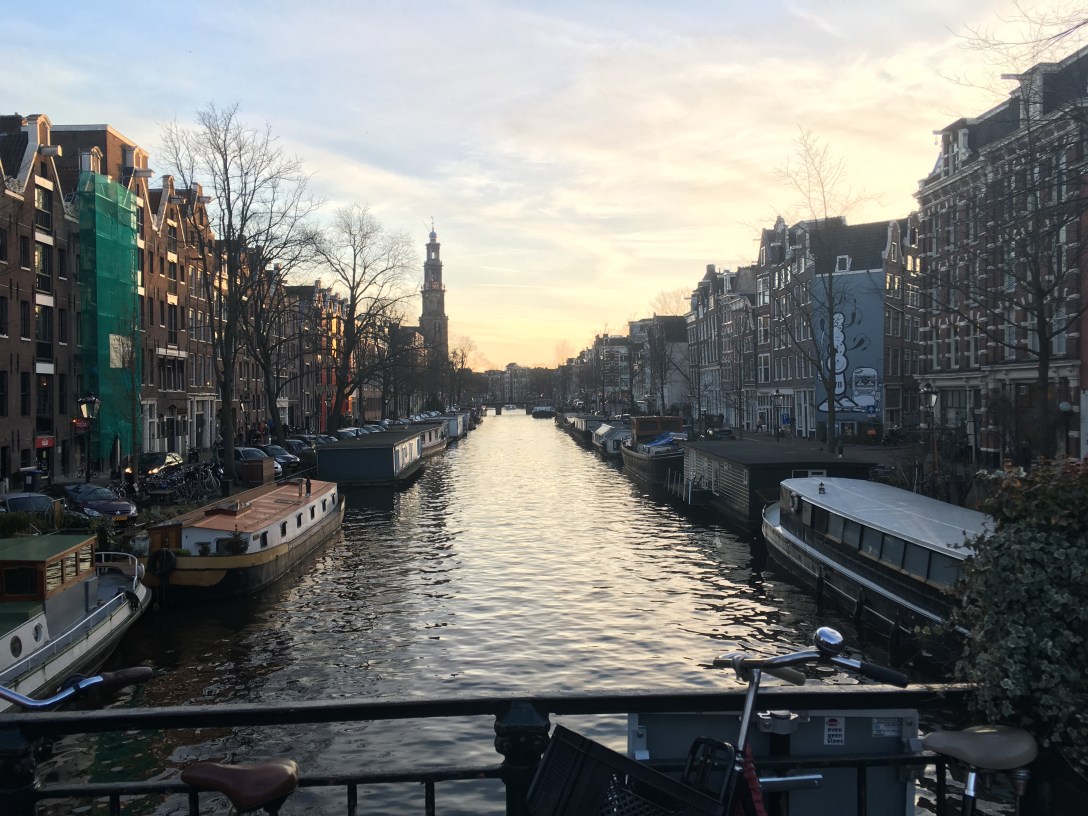


I came to Amsterdam because of a movie belonging to the moody-teen genre. The movie is called The Fault in Our Stars: two teenage cancer patients had a romantic weekend in Amsterdam, the city of freedom and tolerance. It is almost ironic: two young people with terminal illnesses chose to have their date in Amsterdam, but it is also understandable as a metaphor: they had at least a free weekend without cancer treatment, and that is liberating; they afforded to be adventurous once in their lives. Although I am not sure whether I still count as a teenager, I am moody, so that makes Amsterdam a good destination for my exchange semester. I still seek that sense of escape and adventure.


In Rijksmuseum’s most treasured works, I do not see God being portrayed anywhere. Instead, I see merchants, middle classes and battle ships trying to visualise the Dutch Golden Age across centuries. The Dutch seem to be united for their desire for wealth. History is peculiar and coincidental. The Netherlands is situated among other traditional European powers like France, Germany and Britain. It is historically the place for Jews, merchants, disobedient intellectuals and political refugees. It is the country for freedom and individual choice: soft drugs, euthanasia, homosexual marriage and abortion are all legal under a secular premise. The Netherlands once dominated three quarters of world trade despite its geographical disadvantage. The country today has lost its glory of the Golden Age, but I can still sense the spirit of openness and diversity. Amsterdam is an interesting place, not in the sense of Singapore’s vibrant economy, but in its possibility.
 CARPE NOCTEM
It’s my favourite European city, not just because in ‘the fault in our stars’ it is the city where all bubbly dreams happened, but also because of the sheer contrast of its day and night.
LikeLike