Perhaps surprising to many, infinity comes with different sizes. While mathematicians can establish this generic result, they cannot always calculate or pinpoint different sizes of infinity. Such incapability demonstrates that mathematics is still an incomplete logical system. To me, the incompleteness of mathematics has an existential overtone echoing the finitude of human existence in contrast to people’s pursuit of eternity, meaning and purpose for their lives. That contrast, or paradox of life, reveals the pain of finite human existence, which I understood more in a creative writing workshop organised by USP. In this post, I explore how the desire to reach the infinite and the pain of finite existence inspire mathematicians and artists in their pursuits of truth and beauty.
Category: Philosophy
Reason and Wounded Women
Cogito, ergo sum. René Descartes famously claims after meditating on the certainty of human knowledge. Upholding the rational, thinking self, Descartes pioneers modern rationalist philosophy which believes that reason is the most effective, if not the only method of acquiring knowledge. I confess that reason, with its promise of universality and objectivity, enticed me into studying philosophy in university. But as I encounter more complex situations in life, I increasingly find reason incapable of representing reality and guiding my moral decisions. Reason seems to detach me from everyday life and trivialise ambivalent moral situations that do not immediately make logical sense. I have been internally conflicted regarding rationalist philosophy and the superiority of reason in everyday life...
Protected: Joy in the Post-Enlightenment Era: Abraham’s Faith and Zarathustra’s Eternal Acceptance
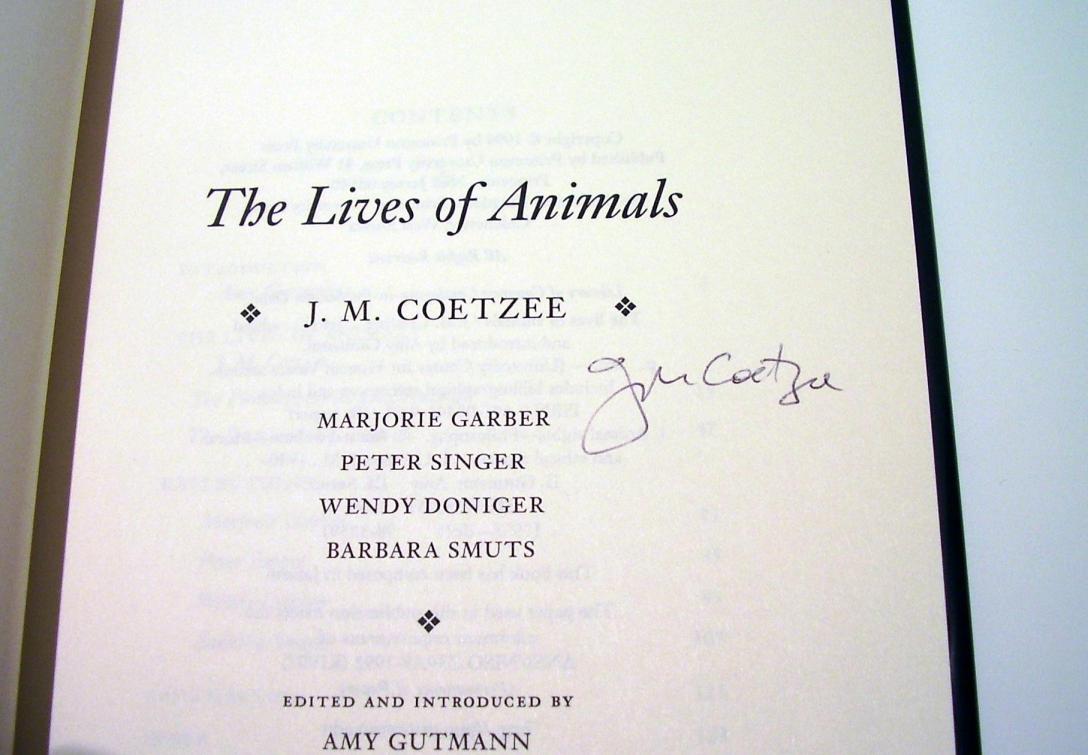
Lives of Animals, by J.M. Coetzee
In J.M. Coetzee’s lectures on animal ethics, the moral debate quickly evolves into a metaphysical one. Instead of limiting her discussion to whether it is ethical to kill animals, Elizabeth Costello, the protagonist in Coetzee’s fiction, challenges the status of reason and its moral significance. In Peter Singer’s response to Coetzee’s lectures, Peter, the fictional… Continue reading Lives of Animals, by J.M. Coetzee
Beyond Meaning: Film-Being and The Production of Presence
In this essay, I contrast Gumbrecht’s insight with the cognitivist and Daniel Frampton’s phenomenological views on cinematic experiences. Borrowing scenes from Terrance Malik’s film The Tree of Life, I propose that cinematic expressions can create presence besides communicating stable, concrete meanings that mostly engage one’s mind. I side with Gumbrecht and argue that merely attributing or reconstructing the meaning of a film, cognitively or phenomenologically, limits the philosophising potential of the medium. After all, film intrinsically philosophises as a physical reality, or film-being.
Our Lives Are Still Our Own: A Nietzschean Reading of Cloud Atlas
I explore how the narrative structure of Cloud Atlas helps to demonstrate Friedrich Nietzsche’s arguments about the death of God and eternal recurrence. Moreover, I consider how the film, inspired by the Buddhist concept of karma, challenges Nietzsche’s individualistic solution to nihilism and how Nietzsche may respond to the challenge.
The Myth of Infinity: Does Platonism Pave the Stairs to God?
This paper explores the idea of infinity as both a mathematical concept and a metaphysical concept while seeking unity between the two aspects of infinity under Platonist realism. While addressing relevant substitutes of the classical Platonist view of infinity and considering the contemporary revival of Platonism argued by Kurt Gödel alongside recent developments in Mathematical Logic pioneered by Georg Cantor, this paper rationalises the enduring charm of Platonist realism and argues for its unrivalled elegance in explaining the concept of infinity.