
We all need some magic mushrooms sometimes. I do not mean the ones you can buy on the streets of Amsterdam. I mean the ones that effectively poison our husbands/wives (but don’t kill them) so that they become sick, vulnerable and needy. The extent of neediness is essential. And hallucinations about dead parents are a bonus. These magic mushrooms remind our loved ones of the importance of our companionship and the limit of their outsized ego. They play a key role in a lasting, healthy, self-correcting relationship. After all, love is toxic, literally.
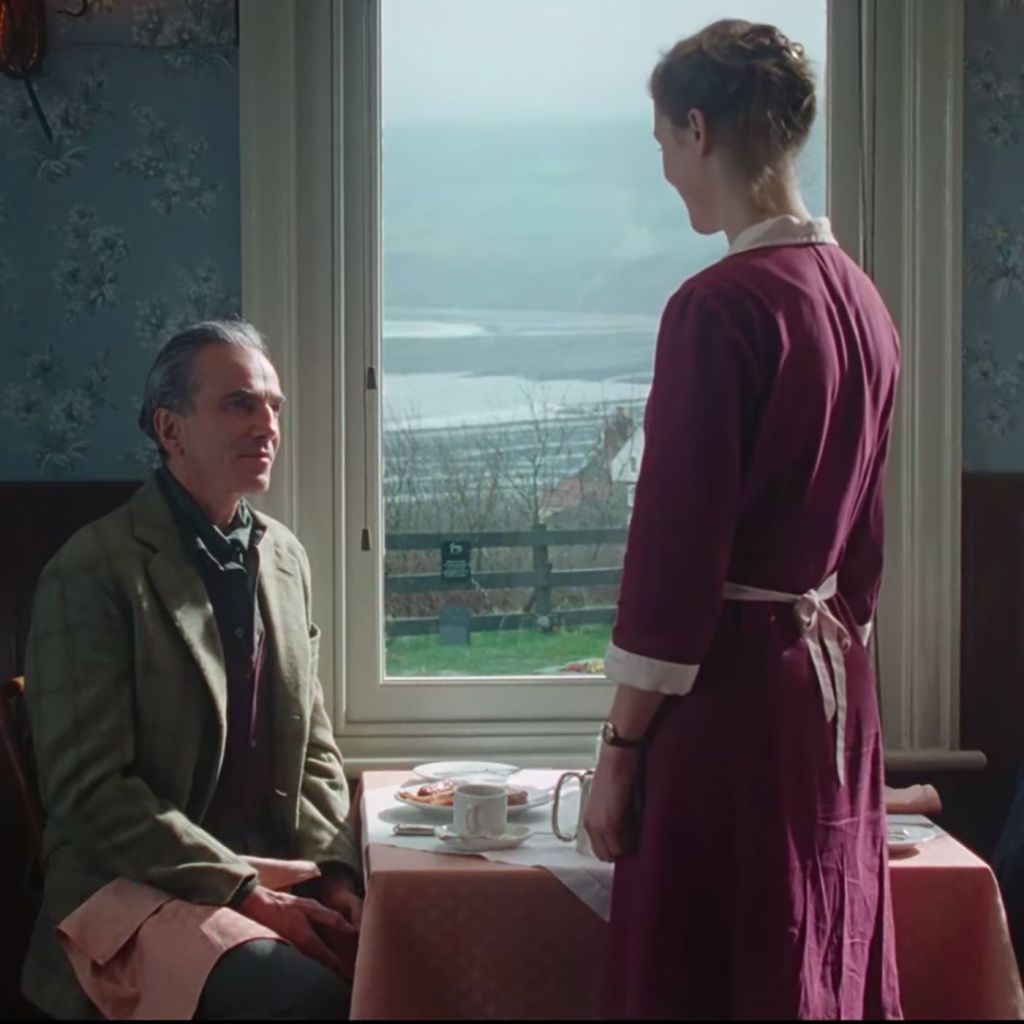
That is what Phantom Thread (2018) tells me, at least for the most part. It is a cute little story about falling in love and keeping the other one around. It’s about those critical moments when one is not sure whether love can last, whether the other one is still willing to play the game. Those magic mushrooms come in handy during those moments, like a reminder or the blunt SALE board from a local bargain shop. We hate to buy those magic mushrooms, but they come as our last resort. And every relationship needs that last resort.
Phantom Thread is the first movie I watch after I finish all exams and officially become unemployed. The title appears on Netflix during the pandemic lockdown. I watched it for the first time when I was in Amsterdam two years ago. I watched it at EYE Filmmuseum where you can reach by taking a ferry from the back of Amsterdam Centraal. I still receive promotional emails from the museum these days, although I do not understand a single word in Dutch, as if the Film Institute is calling me to re-visit or to take a Dutch class someday. At the museum, the film was screened with Dutch subtitles, so I might miss some lines from those characters. I remember the film for its airiness, dreamy nostalgia, and satirical sophistication. Although the film seems to be an ultra-serious production involving Daniel Day-Lewis (duh), it is in fact a simple, witty period drama about the irony and the contest of romance.
Reynolds Woodcock (Day-Lewis) is a London dress designer running a family business with his old so-and-so Cyril (Leslie Manville). I have learned, from all the biographies I have watched, that talent is a euphemism for idiosyncrasy. Reynolds does not like needy, fat models, for example, and he prefers breakfast to be dead silent. It is when he gets tired of the last model-in-residence that he meets Alma (Vicky Krieps), a waitress serving at a restaurants near the Woodcock’s country house. They fall in love, or at least sort of, and Alma becomes the next model-in-residence. Reynolds likes a little belly, I am told. Unknown to Alma, Reynolds will soon get tired of her and become a cactus-in-the-ass just to get rid of her. But Alma is a smart girl, a cook who knows what she is doing. In one of those critical moments, she poisons Reynolds, with magical mushrooms, until he hallucinates his dead mother. They get engaged after Reynolds recovers. The trick works. But every relationship has its ups and downs: Alma has to gather some more mushrooms soon after. By the time Alma is ready to poison Reynolds again, Reynolds expresses his awareness of the conspiracy, and the two kiss.
There are many reasons why I picked Phantom Thread as the movie-to-go after graduation. Obviously, its sudden appearance on Netflix was one of them. But more importantly, it is the lightness of the narrative, reminding me of the raw, pristine joy of film-watching that defies the anxiety of graduation and unemployment. It is the sheer contrast between its production design and its narrative, lean but still sophisticated.
The compulsive disorder of a London dress-maker with mother issues, the exotic countryside waitress/mistress/dressing model with no breasts, and the sceptical elder sister with the most passive-aggressive smile. They all have some pretty strange packages to begin with, and somehow they come together as an ensemble, leading my flight from reality, the COVID-19 pandemic, the imperfection of the world.
There is something quite addictive about European period drama, or at least American filmmaker’s revitalisation of European period drama. Before Paul Anderson’s Phantom Thread, there was Wes Anderson’s Grand Budapest Hotel, Woody Allen’s Midnight in Paris, and (perhaps I should also add) Ang Lee’s Sense and Sensibility. The key to unlock those productions is their humour, often subtly blunt, and their surreality. I don’t know why, but being an exchange student in Amsterdam makes me appreciate the surreality of Europe. Perhaps it’s the architecture, the weather, or the wallpaper. It is the remoteness of the time zone or the presence of the fairy-tale nostalgia. And it is also the fact that I am the outsider witnessing its past scars and glory.
It is interesting that I am not part of its past, but I come to commemorate its past. Like a voluntary ritual, one feels the urge to honour the tangibility of the past, the physicality of time. Paul Anderson, Woody Allen, Ang Lee. They have all come to a similar place. Outsiders become comrades; the past becomes the present.

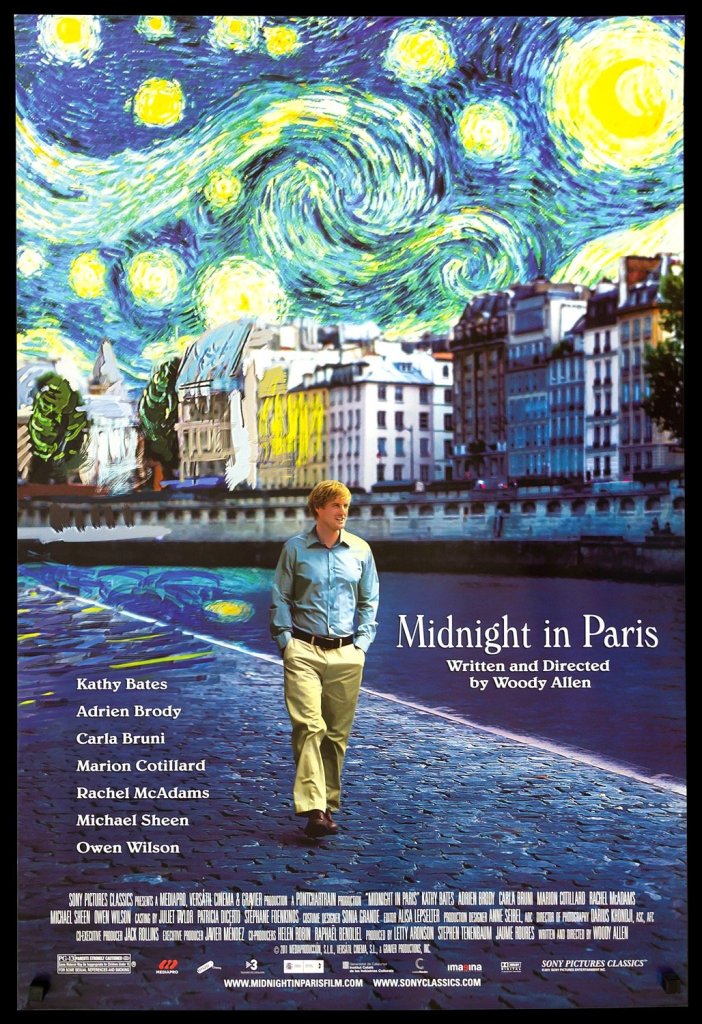
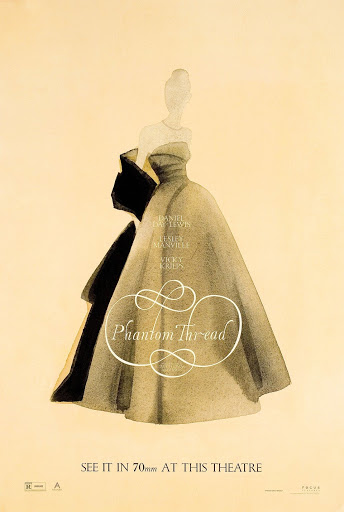
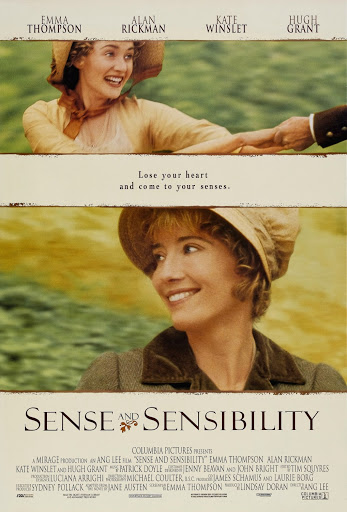

Some say that nostalgia is about things in the past, but after watching Phantom Thread, I find it a continuous effort of deconstruction and reconstruction, a staged artistic reality, an interpretation. The nostalgia is not just about le temps perdu, but also the craftsmanship and the ability to cook a meal with purpose. It is the kind of filmmaking that does not follow the formula of a grand Hollywood narrative. Nostalgia is about juxtaposing the familiar with the unfamiliar, absence with presence, and what used to be there with what has always been there. Phantom Thread, like magical mushrooms, is the kind of film that makes you giggle, wonder, and feel good to be alive.
 CARPE NOCTEM