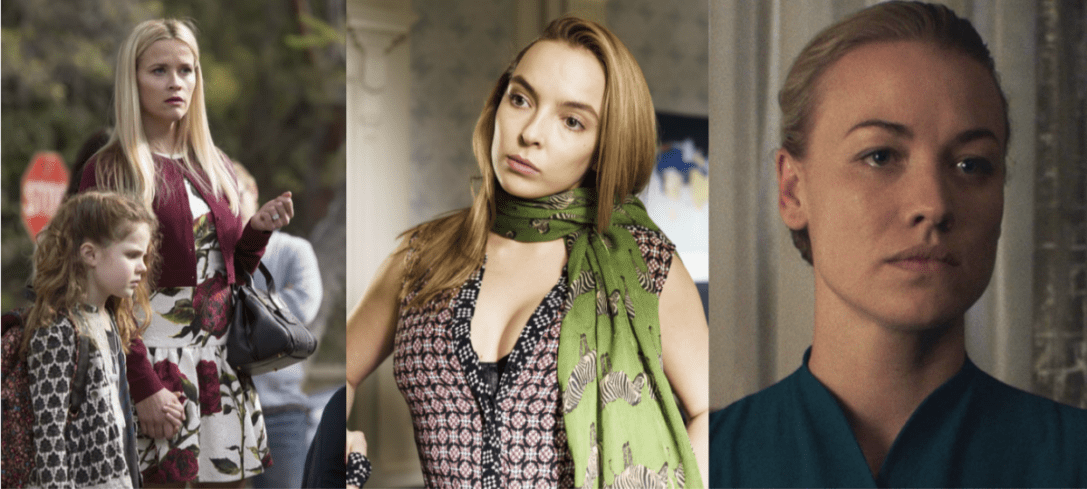
Feminism has never been more voguish on TV. Many recent shows, including The Handmaid’s Tale, The Good Fight, Big Little Lies and Killing Eve, to just name a few, have acquired commercial and critical success. HBO blockbusters like Game of Thrones and Westworld have both featured powerful female protagonists with varying degrees of awkwardness. I have watched all these shows, and they are peculiarly similar. They are all inherently commercial productions to begin with, and they all depict women who fit into the public imagination of feminism: the sort of women who are rebellious, manipulative and capable of shooting a gun unlike those James Bond girls in the good old days.
There is something unsettling about this, and I am afraid that we are moving in the wrong direction despite unprecedented media attention given to women. I have learned, of course, not to mistaken a woman’s meekness for weakness, to listen to women’s complains before they snowball, and to understand why women change from friends to enemies to frenemies on a whim. I am forced to learn all these, and the high scores on Rotten Tomatoes entice me to dismantle my critical lens. But after finishing these shows (and enjoying them, for the most part), I find something seriously problematic, if not dangerous about feminist discourse on TV. The popularity of these shows exposes the inherent irony and gender discrimination not just in the entertainment industry but also in the public discourse today.

I want to first talk about The Handmaid’s Tale, because its first season to me was the most stunning among all these shows. Based on Margret Atwood’s novel of the same name, The Handmaid’s Tale depicts the life of a fertile woman in a misogynistic state or a totalitarian theonomy and explores what it means for a woman to be free, physically or emotionally. The first season was a timely production as the 1985 novel strikingly resembles today’s America under Donald Trump, or at least warns what America might become if it continues to fall under someone like him. The camera footage feels particularly intimate, with warm colours, blurry good-looking women and submissive gestures. There is perhaps something addictive about these elements, but that does not help to liberate women. The show seemed to freeze at that addictive regime, and nothing has been done, or can be done further.
The first season utilised all materials from Atwood’s speculative novel, but writers have been on their own after the first season. What they have produced, unfortunately, is to keep sending the female protagonist back to the regime, to the same family, although she has been given multiple times to escape season after season. Sometimes, I cannot tell whether The Handmaid’s Tale is a TV show or a torture pornography. The pace just bores me, and the repetitiveness frustrates me. Hulu just renewed a forth season for the show, and the producer once claimed that he had ten seasons in mind. I am not entirely sure what a tenth season of The Handmaid’s Tale would look like, but I am sure it will continue torturing handmaids on TV with newfound creativity.
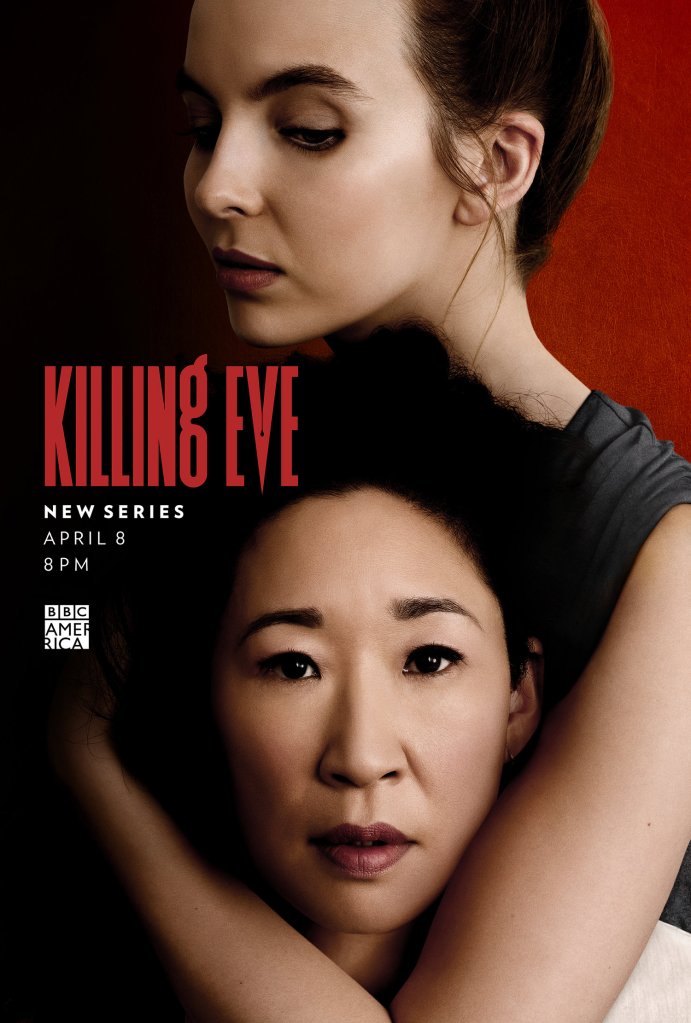
Killing Eve is another addictive show, but in a different sense. All women, no matter how minor their roles, are profoundly weird. An Asian middle-aged woman (working for British intelligence) fell in love with the young female Russian assassin she was investigating. How exciting. I guess we are truly in a globalised world. Phoebe Walter-Bridge produced and wrote the first season that defied all expectations upon a detective drama. Performances in the leading role have also been critically acclaimed, because these actresses seem to have few predecessors in the history of television. I wonder whether I was watching lesbianism, detective drama, dark British comedy, or all at the same time. But to me, the show is really all about under-appreciated female employees.
But again, major production companies like BBC rushed to renew a second and third seasons. Walter-Bridge did not manage to write the second season so the tone was slightly different. Expectations were high. The script of the second season does not flow as smoothly as the first as writers seem to create awkward moments for the sake of awkwardness, and imply lesbianism for the sake of lesbianism. They really wanted to push up those ratings further and cater to a wider demographic. The investigation was apparently over, for unknown reasons, and the two women were suddenly, illogically and insensibly working in the same team. It turns out that they were indeed working for the same boss, but somehow the show has lost its magic, because those women became boring and predictable.
I also just finished watching the second season of Big Little Lies, a show that seems to give everyday female struggle the weight it deserves. The show was originally ordered as a limited series, but after multiple Emmy nominations, it was suddenly renewed for a second season. ridiculing the entire award season. I really think that the ending of the first season was perfect in its tone, emotional resolution and imagination, and any addition would be melodramatic. Perhaps Meryl Streep could justify another season, but the show still feels Emmy-baiting and to be frank, like a giant little mess. All the women were given their moments in the show, but they are clearly being watched by men as they are having their moments. Their moments could not make sense without the male gaze; they are too self-aware in an uncomfortably staged narrative.
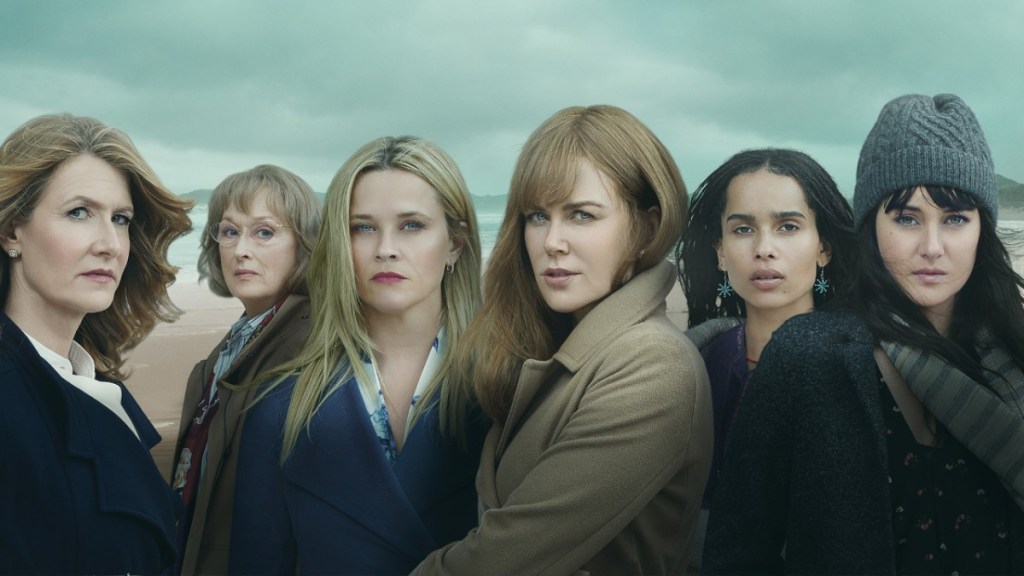
The second season was directed by Andrea Arnold, the British female director known for her independent films. However, before the second season was aired, the series director asked the director of the first season, Jean-Marc Vallee, to edit the footage of Arnold for consistent aesthetics across the two seasons. Arnold did not know that her footage would be edited when directing the second season, and she was assured of full creative control. As a result of that rushed editing, the second season is at times messy to watch, with two creative voices conflicting in the show. What happened to Big Little Lies reflects the current state of feminism in Hollywood. Shows, featuring more nuanced women, are still controlled by male producers. Although there are many more feminist shows produced to satisfy an increasing consumer demand, it seems that they are doing little to change the gender dynamics in the industry.
So what is the root of the problem? All these shows started well but were quickly manipulated, like Modern Family, by the capitalist machine to become something stereotypical, insensible and tiring. As an impactful social movement in the past century, feminism (of several waves) challenges us to think about systematic social injustice and to examine the power dynamics exercised upon us just because of gender, race or income. I always believe that feminism is not about women; it concerns everyone. It is not about female struggle and secret revelation; it is about social justice, change and a more egalitarian future. Feminism is supposed to challenge the prevailing capitalist morality and patriarchal norms instead of reinforcing them. These commercial dramas are not fulfilling their roles as feminist productions. Rather, they expose and strengthen the systematic injustice that already exists in the entertainment industry and the public discourse today. Feminism becomes something to consume, to speculate and to have some perverse fun speculating.
Moving on, I wonder whether I should stop watching these commercial productions and turn to independent TV shows, if they still exist. Even if there are independent TV shows that address feminism from a critical perspective, I am afraid they are not nearly as addictive and influential as those commercial shows. Perhaps TVs should not exist in the first place, at least to some extent. Consumable feminism marries some of the most disturbing aspects of watching TV. It persuades its audience not to think or question, and to eagerly wait for another episode, another season which, guess what, starts in five seconds (they might be kind enough to skip the introduction and ending credits too). It portrays women with modern stereotypes and reinforces the capitalist perversity that is very often disturbing and unethical. One should not learn feminism from TV shows; it’s still better to read Virginia Woolf. It’s fortunate that we still have so many feminist classics that challenge our thoughts; it’s at the same time unfortunate that modern media are not pushing us any further.
 CARPE NOCTEM